
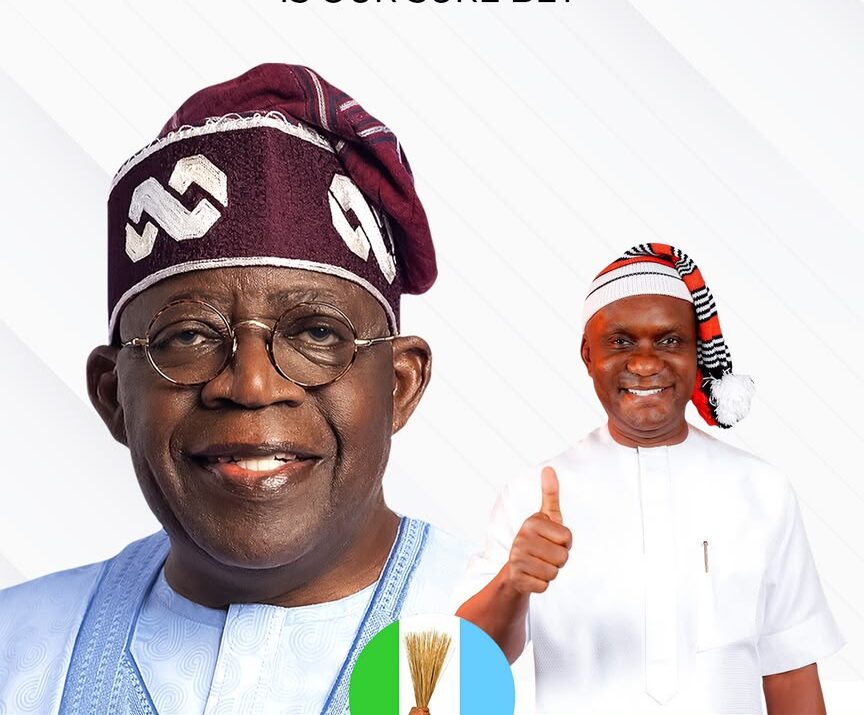

“You cannot build a house for tomorrow on the weak foundation of yesterday. We must lay new blocks, even when the rain is falling.”— Adapted from President Bola Ahmed Tinubu
Three years into his presidency, President Bola Ahmed Tinubu has embarked on what may be the most deliberate economic and governance recalibration Nigeria has seen in a generation.
He came into office on May 29, 2023 with a clear declaration: “Fuel subsidy is gone.” In that single sentence, he signaled that the era of deferring hard choices had ended.
Restructuring, at its core, is about rearranging the house so it can stand longer and serve more people. For Nigeria, that meant confronting distortions that had weakened public finances, scared investors, and made planning impossible.
The first pillar of this restructuring is fiscal discipline. By removing the costly petrol subsidy and cutting electricity subsidies, the administration stopped the bleeding of trillions of naira that once vanished into opaque payments.
The results are already visible in the numbers. The fiscal deficit narrowed from 5.4 percent of GDP in 2023 to approximately 3 percent in 2024, while federation revenue rose from ₦16.8 trillion to ₦31.9 trillion.
That new revenue is not sitting idle. It is being channeled into roads, rails, power, and social programs that touch ordinary citizens directly. More than 2,700 kilometers of roads are under construction or rehabilitation nationwide.
The second pillar is monetary credibility. The unification of exchange rates and clearing of a $4 billion FX backlog restored confidence in the naira and in Nigeria’s commitment to market-based policies.
That credibility has produced tangible dividends. The stock market surged nearly fivefold to a record 250,000 points, market capitalization grew, and international rating agency Fitch upgraded Nigeria from B- to B in April 2025.
Foreign investors, who had stayed on the sidelines, are returning. New oil and gas investments are being announced, domestic refining capacity is rising, and fuel imports are falling, easing pressure on our foreign exchange.
The third pillar is sectoral transformation. Recognizing that oil alone cannot carry Nigeria’s future, President Tinubu approved a Presidential Petroleum Reform and Value Optimisation Taskforce to design the next phase of structural reforms in that sector.
The Taskforce is not another talking shop. It is a time-bound technical body charged with delivering execution-ready blueprints to unlock capital, improve transparency, and position Nigeria as a leading global energy investment destination.
Beyond oil, the February 2026 launch of the Nigeria Industrial Policy marks a decisive shift toward manufacturing, value addition, and job creation. The goal is a $1 trillion economy in five years, driven by inclusive and decentralized growth.
This is restructuring with a human face. Through NELFUND, millions of Nigerian students now have access to loans to stay in school. The CNG program is reducing transport costs and easing the burden of subsidy removal on households.
Governance itself is being rewired. The Renewed Hope Ward Development Plan is mapping economic potential across all 8,809 wards, ensuring that planning starts from the grassroots and moves upward to the state and federal levels.
Such decentralization matters. When wards have data, they have a voice. When local governments have more resources, service delivery improves. That is how accountability becomes real, not theoretical.
On security, the administration has intensified operations against banditry, insurgency, and criminal gangs. The link is clear: no investor builds factories where there is no peace, and no farmer feeds the nation where there is no safety.
A good example is the renewed engagement with Ogoni communities. By addressing historical grievances, the government is creating the conditions to restart oil exploration in a way that benefits both the people and the treasury.
Critics are right to point out the hardship. The cost-of-living squeeze has been severe, and inflation remains a challenge. But restructuring is not magic. It is medicine, and medicine often tastes bitter before it heals.
What distinguishes this moment is political will. Previous administrations discussed these reforms for decades. President Tinubu chose to act in the first week, knowing the political cost, because the economic cost of delay was higher.
The international community has noticed. The World Bank’s April 2026 Nigeria Development Update and the IMF’s 2025 Article IV Consultation both acknowledge significant progress in restoring macroeconomic stability.
More importantly, Nigerians are beginning to see the logic. A stable currency means businesses can plan. More revenue to states means more projects in communities. More transparency means fewer excuses.
The central test ahead is jobs. With 3.5 million Nigerians entering the labor force each year, the restructuring must now translate into employment-intensive growth. The industrial policy and infrastructure push are designed for exactly that.
This is not about one man or one party. It is about laying a foundation that no future government can afford to ignore. Institutions, rules, and incentives are being reset.
History will judge this period not by the pain of the transition, but by whether we used the pain to build something durable. The early signs suggest we are.
President Tinubu’s restructuring is far from complete, but it has already changed the trajectory. Nigeria is no longer drifting. It is recalibrating, with purpose, toward a future where our resources work for our people, and where governance finally matches our potential.
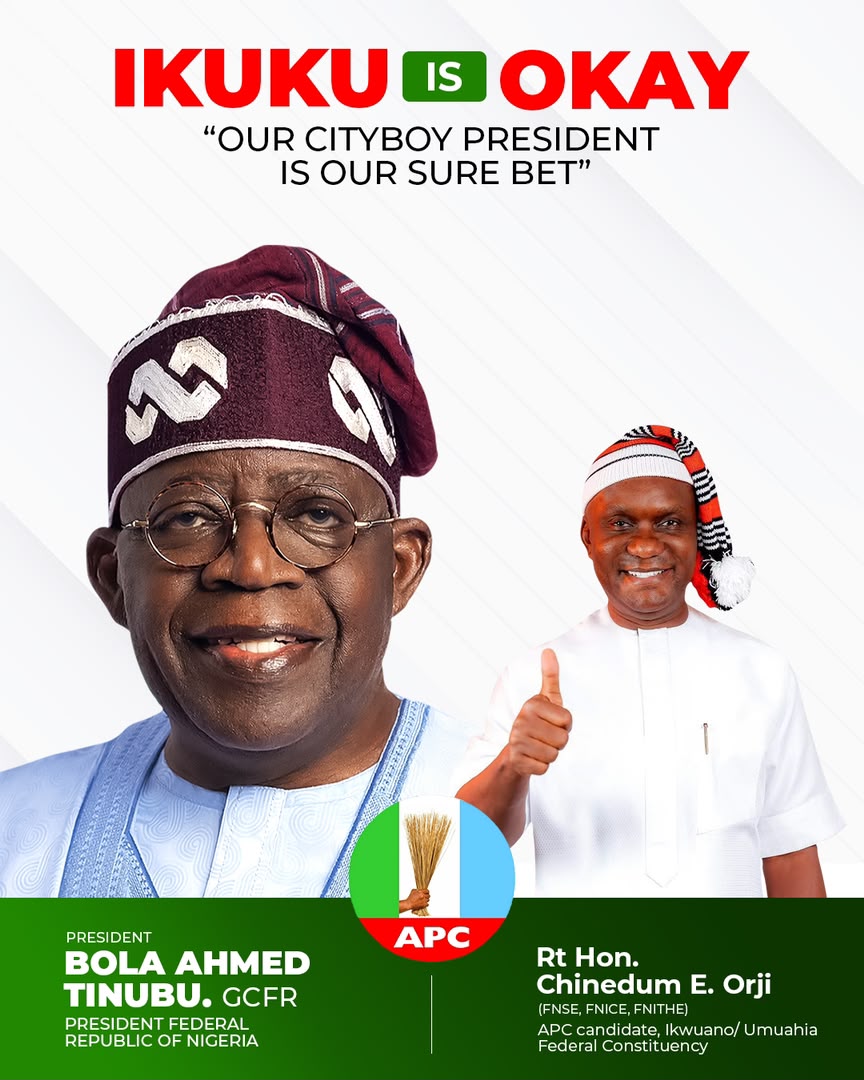
Rt Hon Chinedum Enyinnaya Orji, FNSE, FNICE, FNITHE
APC House of Representatives Candidate for Ikwuano Umuahia Federal Constituency writes from Amaokwe Ugba Ibeku, Abia State.
1 Comment
Ukeje Ann
2 months agoHon, chinedum Oji, we love you