

What started perhaps as a joke appears to have gradually degenerated into something far more troubling. People react to failure differently. Some accept disappointment with the hope that another opportunity may come their way; others continue to brood over defeat until resentment consumes their judgment. That is madness taken too far. Nothing is more troubling than knowing you are going insane yet cannot help it.
What is increasingly difficult to understand is the apparent determination by certain faceless individuals to manufacture narratives and feed them to the media in an attempt to create controversy around Michael Okpara University of Agriculture, Umudike (MOUAU).
I must commend the University for refusing to be distracted by what appears to be a series of unsubstantiated publications. Two persons cannot go mad at same time. Once you identify insanity, your strategy should be to apply caution and avoid the person(s).
In our earlier intervention, we advised those who genuinely had concerns to approach the appropriate authorities and present their grievances through legitimate channels. Rather than heed that advice, they appear to have chosen anonymous blogs as their preferred avenue for circulating allegations. They can continue to hallucinate within themselves while nurturing the wound of rejection.
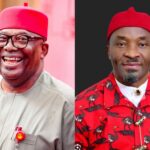
The latest campaign and cheap blackmail has now shifted its attention from the Vice-Chancellor to the Pro-Chancellor and Chairman of the Governing Council, Comrade Fidelis Edeh.
One of the publications reportedly claimed:
“The authorities of Michael Okpara University of Agriculture, Umudike (MOUAU), have been given a seven-day deadline to release information regarding the activities of the Pro-Chancellor and Governing Council Chairman, Comrade Fidelis Edeh.”
The obvious question is: Who is issuing the deadline ?
Under what authority was such a deadline issued? Who are the individuals or organisations behind it? Where is the official communication? These are basic questions that any responsible publication ought to answer.
The issue of the University’s financial position, including income and expenditure, has been addressed with the appropriate stakeholders and authorities. There is therefore little value in manufacturing an alternative narrative through anonymous platforms simply to create public outrage.
Then came what was presented as the statements of groups calling themselves the “Transparency Initiative for MOUAU” and “Concerned Parents of MOUAU.” These groups reportedly appealed to President Bola Ahmed Tinubu to remove Comrade Fidelis Edeh as Chairman of the University’s Governing Council, alleging leadership crisis, interference, victimisation and declining staff morale.
To believe that some dullards wrote such arrant nonsense and went to a an unknown blog to draw the attention of the President is madness taken too far. Before appointment Comrade Edeh, President Tinubu knew his capacity to deliver. But if individuals genuinely believe that the Council Chairman has violated any law, regulation or official directive, there are established institutional and governmental channels through which such complaints can be presented. A responsible complainant should be prepared to show his face and own up his publications not fooling around with words that has not effect.
The major thing is that, school activities are running smoothly while those who are uncomfortable with success can bury their shame on the Internet with claims and counter claims. This is just tantamount to a fool in a fools paradise. I can imagine how happy they are each time they write and send to a blog.
The school will not open her purse to looters and village idiots parading as opposition to Edeh.
More troubling is another claim that pandemonium allegedly broke out during a Governing Council meeting because internal members supposedly resisted an attempt by the Pro-Chancellor to remove them.
Several Council members were reportedly named in that narrative. However, one of those mentioned, Prof. Ononuju, has publicly dissociated himself from the publication and categorically stated that he never protested, argued or signed any document seeking an extension of his tenure as an internal Council member.
That clarification speaks for itself.
When individuals are named in a publication and subsequently come forward to deny the claims attributed to them, the credibility of the publication naturally comes into question. At the very least, it demands greater scrutiny of the source, authorship and evidence behind the story.
The individuals behind these publications should therefore do the responsible thing: come forward, identify themselves and substantiate their allegations.
If the concerns are genuine, there is nothing to fear from taking them to the appropriate authorities. If the allegations are supported by evidence, let the relevant institutions investigate them.
But if the strategy is simply to hide behind anonymous groups and obscure blogs while throwing allegations into the public space, then the public deserves to know who is behind the campaign and what their real objective is.
Those making the allegations should show themselves. If they are confident in the facts they are peddling, they should have the courage to attach their names to them or forever remain silent in their shame.