
“Great men are not born great, they grow great.” — Mario Puzo
“The arc of the moral universe is long, but it bends toward justice.” — Martin Luther King Jr.
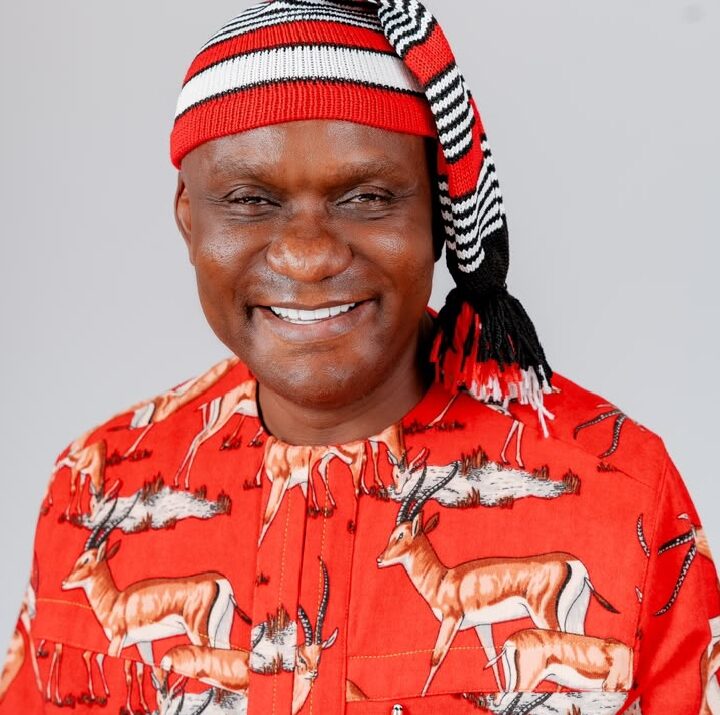
Politics everywhere is full of noise, but the noisiest argument is often the laziest one. In Abia and beyond, Rt Hon Chinedum Enyinnaya Orji has faced repeated attacks that reduce his entire public service to one line: “His father was once Governor of Abia State.” That is not analysis. That is shorthand for envy, and it collapses under scrutiny.
The claim is simple and infantile: because Chief Theodore Orji held office, his son cannot be judged on merit. If we accepted that logic, we would have to disqualify millions of people whose parents opened doors in law, medicine, business, or academia. Lineage may provide a starting point, but it does not cast votes, sponsor bills, or face constituents.
Public service is tested in the arena, not in the family tree. Chinedum Enyinnaya Orji’s political inroads have been made through elective office, legislative work, party leadership, and direct engagement with communities in Abia. To ignore that record and fixate only on his surname is to argue in bad faith.
For perspective, let us cross the Atlantic. The United States, the world’s oldest continuous democracy, has no allergy to political families. It judges them by performance, not by birth alone. The Bush family is the clearest example that demolishes the “son of a governor” objection.
George H. W. Bush served as the 41st President of the United States, after years as a Congressman, U.S. Ambassador to the UN, CIA Director, and Vice President. He earned those posts through elections, appointments, and public accountability, not by inheritance.
His son, George W. Bush, later became the 43rd President. Critics debated his policies, his leadership during 9/11, and his two terms in office, but no serious American argument stopped at “his father was President, therefore he cannot be.” Voters, institutions, and history weighed him on his own actions.
The Bush example is not an outlier. Jeb Bush served two terms as Governor of Florida and ran for President in his own right. Prescott Bush was a U.S. Senator. Across generations, the family was contested, criticized, elected, and defeated on the merits of each individual’s record.
That is how mature democracies function. They recognize that a name may open a door, but it cannot keep you in the room. Voters, the media, opponents, and the law all test you. If you fail, the name will not save you. If you deliver, the name will not disqualify you.
Apply that standard to Rt Hon Chinedum Enyinnaya Orji. To “puncture” the infantile attack, ask the simple question the Bush precedent demands: What has he done with the opportunity? Has he held office? Has he legislated? Has he mobilized support? The answer is yes, and it is documented in Abia’s political history.
Dismissing him because “his father was Governor” would be like dismissing George W. Bush because “his father was President.” It substitutes genealogy for governance. It replaces debate about roads, bills, representation, and constituency projects with gossip about family trees.
Moreover, legacy can be a burden, not just an advantage. The son of a prominent leader is measured against a higher bar. Every move is compared, every mistake is magnified, and opponents are quickest to shout “nepotism.” Surviving that pressure and still building a political base is itself proof of competence.
Chinedum Enyinnaya Orji’s advantage, properly understood, is not his father’s title. It is the political education, discipline, and network that come from growing up inside public service. The Bushes had it. The Kennedys had it. The Gandhis in India had it. Voters still decided, case by case.
Nigeria’s democracy is also maturing toward that standard. Citizens are increasingly asking for scorecards: What did you sponsor? What did you attract to your LGA? How did you represent your people? Those are the questions that matter, and they are the questions Chinedum Enyinnaya Orji must be judged by.
Therefore, the attack that seeks to cancel him because of his father is intellectually bankrupt. If the Bush family can produce a father and son as Presidents and still be debated on policy, then Abia can certainly debate a son on his legislative and political record without resorting to lazy lineage politics.
In the end, legacy is not a liability when a leader earns his place. Rt Hon Chinedum Enyinnaya Orji should be weighed by his service, his ideas, and his results for Abia people. That is the American example. That is the democratic example. And that is the only argument worth taking seriously.
Henry Onyema Madubuike is the Convener, Centre for Excellence and Performance in Governance (CEPG).