
When the First Lady of the Federal Republic of Nigeria, Senator Oluremi Tinubu, CFR, stepped into Ukwa East Local Government Area of Abia State last week, she did not come merely for a courtesy call. She came with a spindle, a loom, and a message. Her visit to the Akwete Weaving Cooperative Society was a clear signal that the Renewed Hope Agenda of the All Progressives Congress is not confined to Abuja boardrooms. It is being threaded, dye by dye, in the workshops of our artisans.
Akwete cloth is more than fabric. For centuries, it has been the pride of the people of Ukwa East, a symbol of identity, industry, and ingenuity. Yet for too long, this heritage industry was left to survive on its own, starved of policy support while imported textiles flooded our markets. Senator Tinubu’s presence changed that narrative in one afternoon.
The message was simple and deliberate: Nigerian hands can, and will, clothe Nigeria. The First Lady’s engagement with the weavers, women, and youths of the cooperative underscores the APC’s determination to put small-scale industries at the center of national economic planning. This is not politics as usual. This is policy in motion.
The All Progressives Congress has consistently argued that true economic sovereignty begins with what we produce locally. Import dependence has drained our foreign exchange, killed local jobs, and eroded our culture. By choosing Akwete as a focal point, the Party is telling every LGA in Nigeria that no craft is too small to be part of the big picture.
The economic merits are immediate and measurable. A strengthened Akwete Weaving Cooperative means more looms running, more cotton sourced locally, more dyers employed, and more traders moving goods across the Southeast and beyond. It means money circulating within communities instead of leaking out to pay for foreign fabrics that we can make here.
Wealth creation follows where production is supported. Each cooperative member trained, each young apprentice taken on, each bulk order secured by government patronage is a family lifted and a community stabilized. That is the APC formula: grow the base, and the top will hold.
Employment is the other side of the same cloth. Nigeria’s greatest resource is its people. When we invest in skills like weaving, tailoring, and textile finishing, we are investing in jobs that cannot be outsourced. The jobs created in Ukwa East today are the foundation for an industrial value chain tomorrow.
There is also the cultural dividend. Akwete is heritage. When government backs it, we are not just creating GDP, we are preserving identity. The world is already looking to Africa for authentic fashion. With the right policy push, “Made in Nigeria” can become the premium label on runways from Lagos to London.
This is where leadership alignment matters. Policy without local champions is a memo that gathers dust. It takes political actors who understand the vision and are willing to carry it to the grassroots.
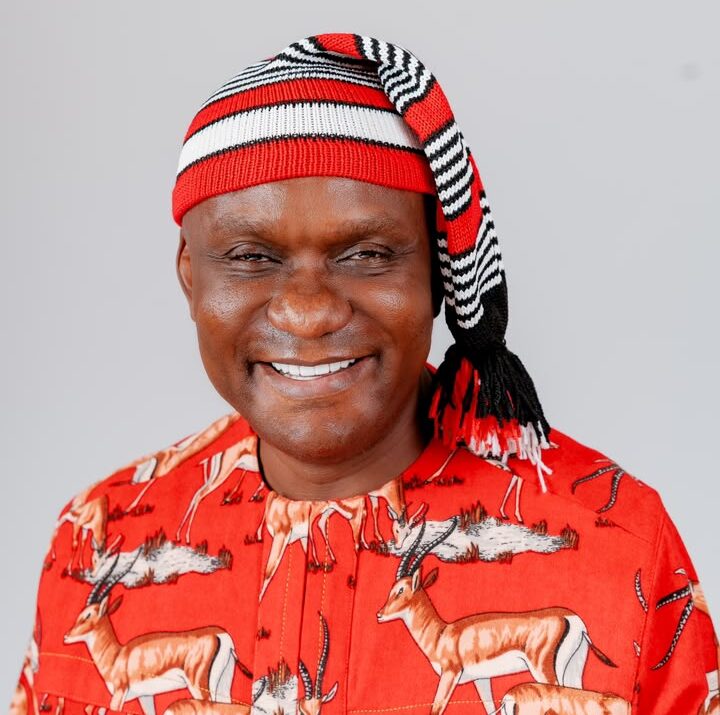
In Rt. Hon. Chinedum Enyinnaya Orji, the APC Candidate for Ikwuano/Umuahia North/Umuahia South Federal Constituency, that alignment is complete. A party man through and through, he did not just welcome the First Lady. He articulated exactly why her visit matters.
According to Rt. Hon. Orji, the visit “illustrates the policy drive of the All Progressives Congress to fast-track the growth of small-scale industries in Nigeria and lessen reliance on imported fabrics, boost Nigeria’s economy and also create wealth and employment.” That is not a soundbite. That is a summary of the APC manifesto translated into Abia dialect.
To call Rt. Hon. Orji a party man is to state the obvious, but to call him a complete party man is to describe his posture. He aligns whole and entire with the Party’s policies. When the APC says “produce what we consume,” he is in Ukwa East to ensure the weavers are seen. When the APC says “jobs for our youths,” he is connecting cooperatives to opportunities. When the APC says “diversify the economy,” he is championing the loom as much as the oil well.
This is the kind of representation the Renewed Hope Agenda needs in the 10th Assembly and beyond. A representative who does not wait for policy to trickle down, but who runs ahead to meet it at the village square. A representative who sees the connection between a shuttle on a loom in Ohambele and a trade balance sheet in Abuja.
Critics will ask if one cooperative visit can change an economy. The answer is yes, when it is part of a pattern. From MSME grants to NASSI support, from CBN intervention funds to presidential patronage of local textiles for official events, the APC has been laying bricks. Akwete is simply the latest and most visible brick.
The socio-economic merits are already unfolding. Reduced import bills. Increased IGR for Abia State. Skills transfer to the next generation. Women’s economic empowerment through the cooperative model. And a renewed sense of pride that what we make here is good enough for Aso Rock.
Senator Remi Tinubu’s visit should therefore be read as both encouragement and assignment. Encouragement to the weavers to scale up quality and output. Assignment to political leaders like Rt. Hon. Chinedum Enyinnaya Orji to legislate, advocate, and attract the infrastructure, markets, and finance that will make Akwete a national brand.
In the end, nations are built thread by thread. The APC has chosen to pick up the shuttle. With leaders like Rt. Hon. Chinedum Enyinnaya Orji standing shoulder to shoulder with the Party’s vision, and with the First Lady lending national spotlight to our artisans, Akwete is no longer just a local cloth. It is a policy statement. And that statement is this: Nigeria will weave its own future.
Henry Onyema Madubuike convenes the Centre for Excellence and Performance in Governance (CEPG).