

As political activities gradually gather pace ahead of Nigeria’s 2027 general elections, conversations across Abia State continue to focus on experience, leadership and representation.
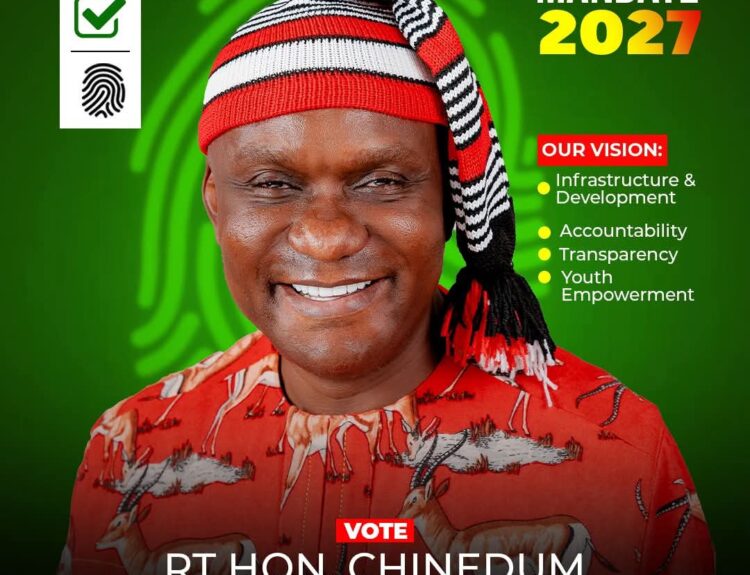
Among the figures attracting significant attention is Rt. Hon. Chinedum Enyinnaya Orji, the former Speaker of the Abia State House of Assembly and the All Progressives Congress (APC) candidate for the House of Representatives seat for Ikwuano/Umuahia Federal Constituency.
His return to the centre of political discourse has reignited conversations about his legislative experience, leadership style and the expectations of supporters who believe his next destination should be the National Assembly.
For years, Chinedum Orji has remained a familiar name in Abia’s political landscape. His supporters describe him as a seasoned legislator whose years in the State House of Assembly prepared him for higher legislative responsibilities. Others argue that the next election will give voters the opportunity to assess his record alongside those of other candidates.
His political journey reflects the path of a lawmaker who rose through the ranks to become Speaker of the Abia State House of Assembly, one of the most influential positions in the state’s legislative arm. The office demanded not only the ability to preside over legislative debates but also the responsibility of building consensus among lawmakers and ensuring the smooth passage of bills and oversight of government activities.
Political analysts often note that serving as Speaker requires skills in negotiation, leadership and institution-building, qualities that can shape a legislator’s approach to governance.
Throughout his years in the Assembly, Orji became one of the state’s most recognisable political figures. Supporters frequently point to his accessibility and grassroots engagement, arguing that he maintained close contact with community leaders, youths and various interest groups across his constituency.
His tenure also saw him associated with community-based initiatives and empowerment programmes that supporters say were aimed at improving livelihoods and expanding opportunities. They cite interventions in areas such as youth empowerment, skills acquisition, community infrastructure and sports development as examples of his engagement beyond the legislative chamber.
For his admirers, these initiatives demonstrated a leadership style that combined legislative responsibilities with direct community outreach. Critics, on the other hand, believe such records should be assessed alongside the broader performance of the Assembly during the period. Ultimately, the evaluation remains one for the electorate.
Supporters further argue that Orji’s years as Speaker gave him an in-depth understanding of how government institutions function, how public policies are developed and how legislative processes can be used to pursue development priorities.
They believe that this experience could be valuable if he is elected to the House of Representatives, where federal legislation, constituency representation and oversight responsibilities play central roles.
Many also point to the relationships he built during his years in public office, suggesting that legislative effectiveness often depends not only on good ideas but also on the ability to work across political divides and engage with institutions at different levels of government.
As campaigns begin to take shape, discussions within Ikwuano/Umuahia are expected to focus on issues that directly affect residents. Infrastructure, education, healthcare, youth employment, agriculture and economic opportunities remain recurring themes in conversations about the constituency’s future.
Supporters of the former Speaker believe his legislative background positions him to contribute to these discussions. They argue that experience in lawmaking and public administration could help him navigate the demands of federal representation if elected.
The coming months are likely to feature robust debate as candidates present their records and visions for the constituency. For voters, the election offers an opportunity to compare competing ideas, leadership styles and priorities before making their choice at the ballot box.
Regardless of political affiliation, one fact is evident: Rt. Hon. Chinedum Enyinnaya Orji remains a prominent figure in Abia politics whose career continues to attract public attention. His supporters see his bid for the House of Representatives as the next chapter in a long legislative journey, while others will judge his candidacy through their own assessment of his record and proposals.
As the road to 2027 unfolds, the electorate will ultimately decide which candidate they believe is best positioned to represent the interests of Ikwuano/Umuahia at the National Assembly. Until then, Chinedum Orji’s political journey is certain to remain part of the wider conversation about leadership, representation and the future of the constituency.