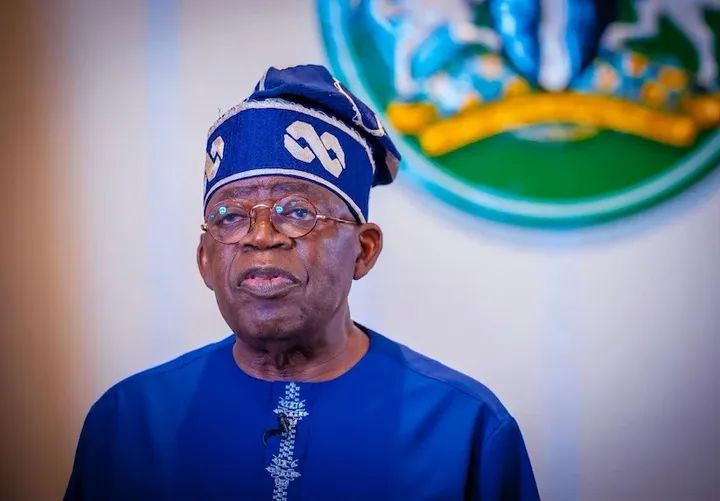

The Presidency has clarified that the ongoing Freedom of Information Act (FOIA) case involving records relating to President Bola Ahmed Tinubu before a United States federal court is a civil records-disclosure dispute and not a criminal case against the Nigerian president.
The clarification was contained in a statement issued on Thursday by the Special Adviser to the President on Information and Strategy, Bayo Onanuga, amid recent reports and public commentary surrounding the case.
According to the Presidency, the matter, filed as Civil Action No. 23-1816 before the United States District Court for the District of Columbia, arose from FOIA requests submitted in 2022 by Aaron Greenspan to several US government agencies seeking records relating to President Tinubu.
The Presidency said the case came more than two decades after the US Consulate in Lagos, in a February 4, 2003 letter to then Inspector-General of Police, Tafa Balogun, stated that an FBI records check had found no criminal arrest records, wants or warrants for Tinubu, who was then Governor of Lagos State.
It explained that after some US agencies withheld records or declined to confirm or deny their existence, Greenspan commenced legal proceedings in 2023. President Tinubu was subsequently allowed by the court to participate in the proceedings as an intervenor.
The statement said the US government agencies invoked what is known as the “Glomar defence,” a legal position that allows law enforcement agencies to neither confirm nor deny the existence of certain investigative records where doing so could compromise protected information.
The court, according to the Presidency, subsequently granted summary judgment in favour of the CIA, the Executive Office for United States Attorneys (EOUSA), the US Department of State, the Department of the Treasury and the Internal Revenue Service (IRS), removing them from the proceedings.
It said aspects of the case involving the Federal Bureau of Investigation (FBI) and Drug Enforcement Administration (DEA) remained under consideration.
The Presidency further disclosed that, in compliance with the court’s orders, the FBI and DEA produced 399 pages of records, with portions redacted pursuant to exemptions contained in US law.
Greenspan subsequently challenged the redactions and sought the release of the documents without the withheld portions.
According to the statement, the FBI and DEA, through the US Department of Justice, opposed the request, citing several statutory exemptions.
These include protections covering grand jury proceedings and certain court orders under FOIA Exemption 3; attorney-client and attorney work-product privileges; law-enforcement-related materials; personal privacy protections under Exemptions 6 and 7(C); and provisions protecting confidential sources and law-enforcement techniques under Exemptions 7(D) and 7(E).
The Presidency said Tinubu, on the advice of his lawyers, had also asserted his rights under FOIA Exemption 7(C), which concerns protection against unwarranted invasions of personal privacy.
It stressed that the release or withholding of records under FOIA does not, in itself, establish criminal liability.
“The litigation is a civil records-disclosure dispute under FOIA. It does not constitute a criminal charge, trial, or judicial finding against President Tinubu,” the statement said.
The Presidency also disclosed the next procedural deadlines, stating that the plaintiff has until September 11, 2026, to file opposition and replies to the processes submitted by the defendants and the intervenor. The FBI, DEA and the intervenor have until September 18, 2026, to respond to any processes filed by the plaintiff.
Onanuga further cautioned Nigerian media organisations against presenting political commentary surrounding the matter as established facts, stressing that the case is before the US District Court for the District of Columbia and will be determined by the presiding judge based on the evidence, applicable law and arguments of the parties.
The Presidency also disputed recent claims by Karl von Batten regarding the proceedings, stating that neither he nor his client, former Vice President Atiku Abubakar, is a party to the case.
It urged the media and the public to distinguish between verified court proceedings and partisan speculation as the legal process continues.