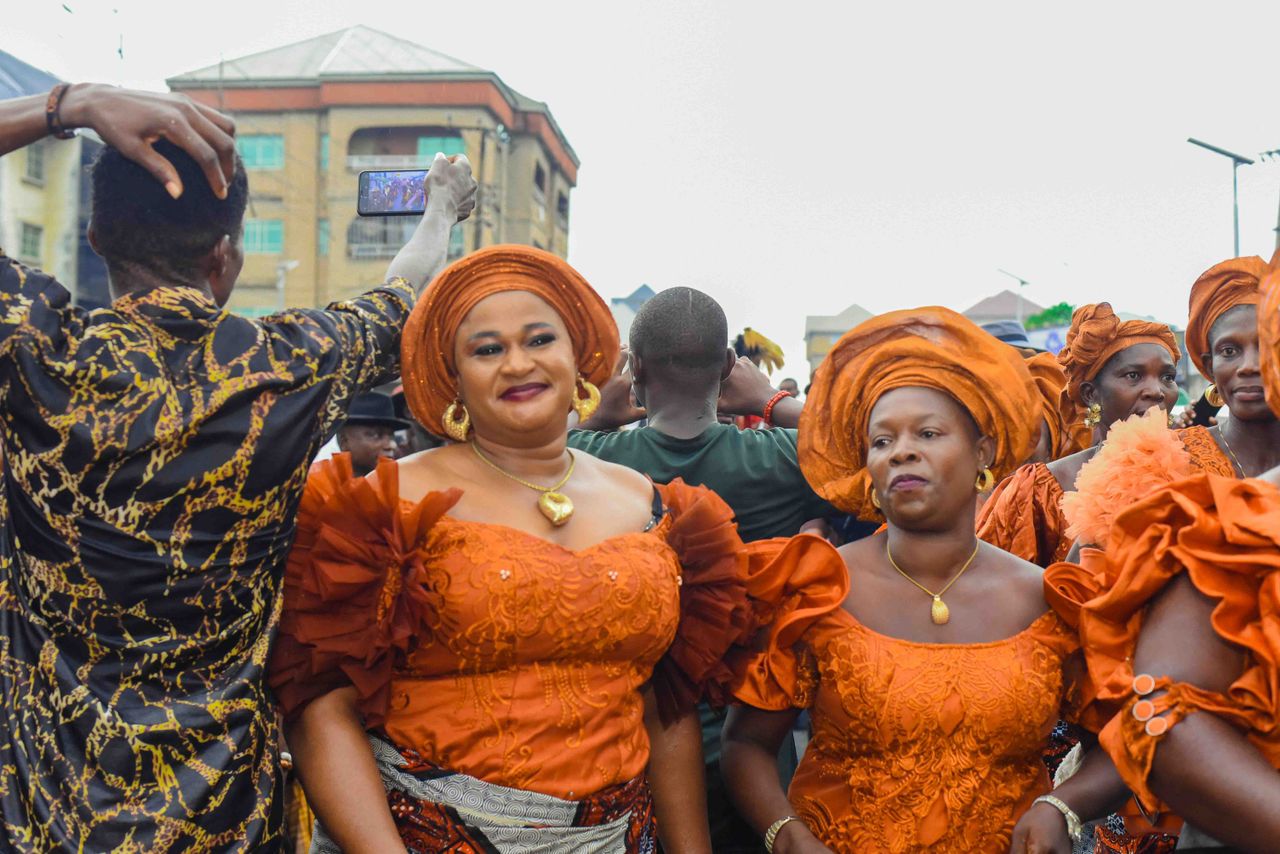


Members of the Egwuena Age Grade have reaffirmed their commitment to preserving the rich cultural heritage of the Abiriba community through the annual Court Cleaning Cultural Festival, popularly known as “Iza Obu.”
The 2026 edition of the festival took place on June 13 in Aba, Abia State, attracting traditional rulers, elders, family members, and other members of the community who gathered to witness the observance of one of the community’s oldest traditions.
Iza Obu, an integral part of the revered Igwa-Mang institution, is traditionally performed by the military age grade as a demonstration of service, discipline, and respect for the institutions of leadership and justice in Abiriba.
During the ceremony, members of the Egwuena Age Grade undertook the symbolic cleaning of the traditional court house, known as the Obu, a revered place where elders and custodians of tradition deliberate on issues affecting the community.
Speaking during interviews conducted at the event, Mr. Onyeuku Okorouga, President of the Egwuena Age Grade, Aba Branch, described Iza Obu as a cultural obligation that connects younger generations with the values and traditions of their forefathers.
Also speaking, Mr. Amogu James, Vice President of the Egwuena Age Grade, Aba Branch, emphasized the role of the festival in promoting communal service, respect for elders, and unity among members of the community.
The General President of Egwuena Age Grade Worldwide, Mr. Kalu Eme, reiterated that Iza Obu extends beyond the physical act of cleaning the court premises, noting that it serves as a reminder of the responsibilities attached to leadership, service, and the preservation of cultural identity.
Mr. Eme also addressed questions regarding the absence of the wives of age grade members during the ceremony. He explained that the tradition draws inspiration from the ancient role of warriors who went to battle while their wives remained at home to care for their families and offer prayers for their safe return.
He likened the members of the military age grade to warriors carrying out communal responsibilities, adding that, traditionally, their wives await their return and welcome them home with joy and specially prepared meals, symbolizing appreciation and support for their service to the community.
Another member of the association, Mr. Kalu Onwuka, underscored the importance of preserving indigenous customs, stressing that cultural practices such as Iza Obu serve as educational platforms through which younger generations learn the history, values, and identity of the Abiriba people.
Prince Nwojo George, while speaking to newsmen, encouraged unity among age grades and prayed for progress and success while upholding the essence of the event
Historical accounts presented during the event traced the origin of Iza Obu to the era when younger men were responsible for defending the community against external threats. Upon returning from military expeditions, they underwent a period of transition into elderhood, during which they were required to demonstrate discipline, responsibility, and commitment to communal service, including the annual cleaning of the court house.
Under the Igwa-Mang institution, the military age grade is entrusted with responsibilities such as maintaining public order, enforcing community regulations, undertaking developmental projects, preserving cultural traditions, and safeguarding the community.
For the Egwuena Age Grade, the Court Cleaning Festival forms part of a four-year cultural obligation expected to culminate in 2028, marking their successful transition within Abiriba’s traditional age-grade structure.
The next edition of the Iza Obu Festival by the Egwuena Age Grade is scheduled to hold in June 2027.
As modernization continues to influence indigenous communities across the country, participants at the event maintained that preserving cultural practices such as Iza Obu remains essential to safeguarding the history, identity, and values of the Abiriba people for future generations.