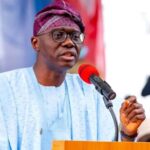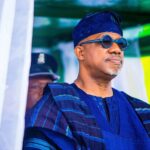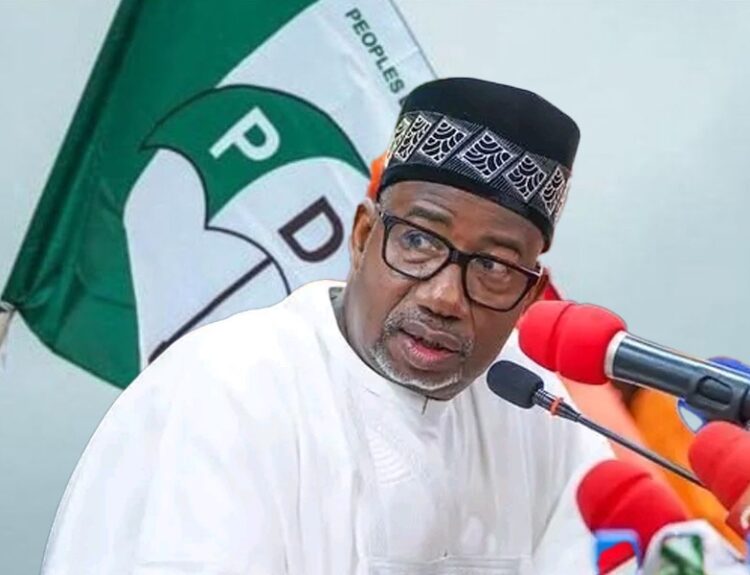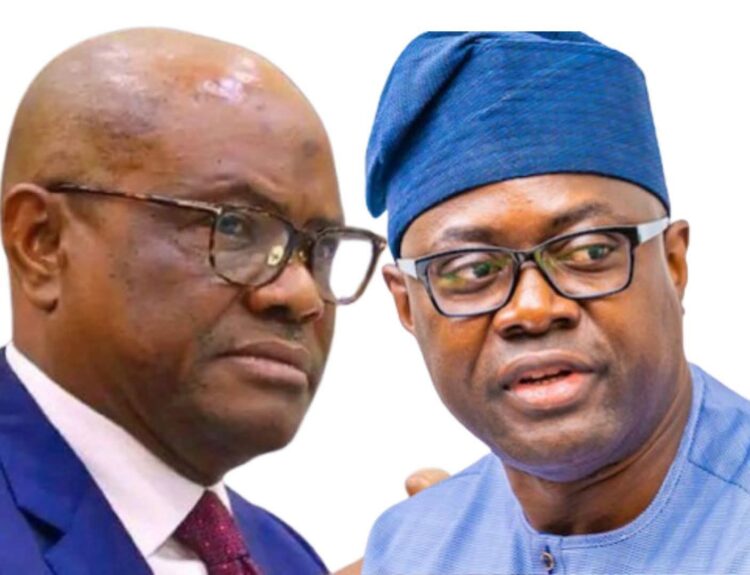
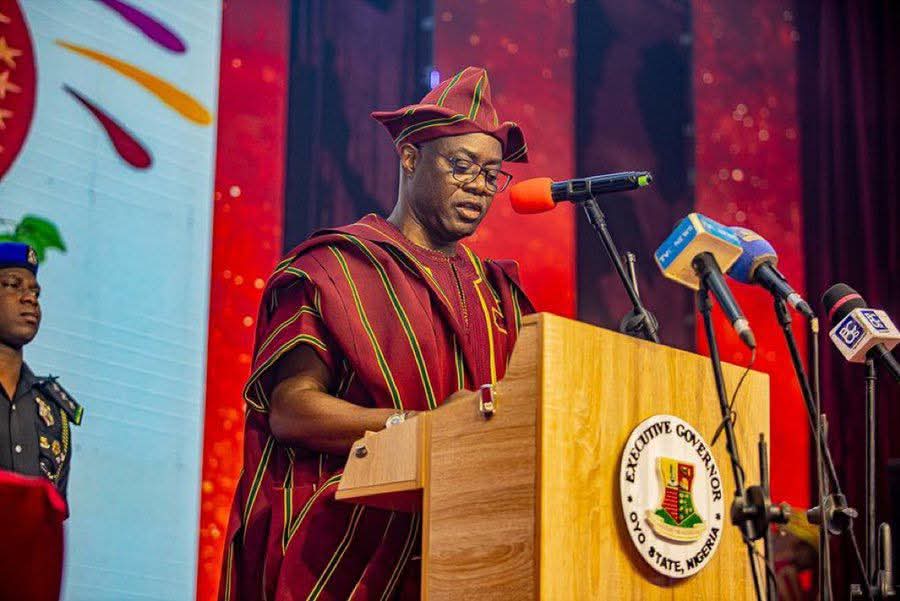

The race to succeed Seyi Makinde in 2027 is rapidly evolving into one of the most consequential political contests in Oyo State in recent history, as a crowded field of aspirants, deep consultations, and shifting alliances redefine the state’s political landscape.
Click Here to Join Our Whatsapp Channel
With the governor set to complete his constitutionally permitted second term, attention has shifted from speculation to strategy, as political heavyweights and emerging actors position themselves for what promises to be an intense and fragmented battle.
PDP: Dominance Under Pressure
At the heart of the unfolding contest is the Peoples Democratic Party (PDP), which currently holds structural dominance in the state but faces mounting internal pressure from competing ambitions and factional alignments.
Unlike previous election cycles, where a clear frontrunner often emerged early, the PDP is witnessing a diffusion of influence, with multiple aspirants consolidating support across different blocs.
Among the prominent figures is Nureni Adeniran, whose leadership of the State Universal Basic Education Board has enabled him to build extensive grassroots networks across local governments. His reach within rural communities positions him as both a technocrat and a formidable political contender.
Also gaining traction is Adebo Ogundoyin, the Speaker of the State House of Assembly. Seen as a symbol of generational shift, Ogundoyin enjoys proximity to the governor and strong appeal among younger elites. However, analysts question whether his legislative influence can translate into statewide electoral strength.
The Chief of Staff to the governor, Segun Ogunwuyi, is widely speculated to be championing the “Ogbomoso Project 2027.” Though yet to formally declare, his supporters argue that his emergence would ensure continuity and consolidation of the current administration’s policies.
Another key figure is Debo Akande, a central player in the state’s agribusiness drive and international partnerships. His close working relationship with the governor, particularly in attracting foreign investment, has elevated his profile within policy and development circles.
Former Commissioner for Finance, Bimbo Adekanmbi, is also re-emerging as a strong contender. Since defecting to the PDP, he has been consolidating support from his Ona Ara base, leveraging his technocratic credentials and involvement in infrastructure initiatives like the Ibadan airport upgrade.
The return of Taofeek Arapaja adds further complexity. With deep roots in party structures and national-level connections, Arapaja commands loyalty among longstanding PDP stakeholders, though he faces the challenge of reconnecting with a broader, more populist electorate.
Declared aspirant Adedeji Olajide has also entered the race with a promise to build on Makinde’s legacy, while party stalwart Femi Babalola remains influential behind the scenes, potentially as a consensus builder or kingmaker.
Other emerging names broadening the PDP field include Olufemi Ajadi and Beulah Adeoye, reflecting a blend of fresh ambition and political experience.
Internal Crisis and Factional Struggles
Despite its dominance, the PDP is grappling with internal divisions linked to national power struggles involving Bala Mohammed, Nyesom Wike, and Governor Makinde.
In Oyo, a faction aligned with Wike is reportedly led by former deputy governor Hazeem Gbolarumi, raising concerns about party cohesion ahead of the primaries.
APC: Deep Bench, Lingering Divisions
The opposition All Progressives Congress (APC) enters the race with renewed energy but faces the familiar challenge of internal unity.
Leading the pack is Adebayo Adelabu, whose federal appointment has significantly boosted his visibility. A former governorship candidate, Adelabu is widely seen as a bridge between technocratic expertise and political ambition. However, uncertainty surrounds his participation, as he faces a March 31, 2026, deadline to resign from office if he intends to run.
Close behind is Teslim Folarin, whose extensive political network and experience remain assets, though repeated candidacies have sparked debate about the need for a fresh face.
Other notable aspirants include Sharafadeen Alli and Abdulfatai Buhari, the latter reportedly considering a shift from the Senate to pursue the governorship.
Also in the mix is Remi Oseni, alongside former deputy governor Rauf Olaniyan.
The APC’s expansive field further includes Akeem Agbaje, Adebayo Shittu, Azeez Adeduntan, Saheed Oladele, and Gbenga Adegbola.
Adding a generational and legacy dimension is Kunle Busari, who recently declared his ambition, drawing on the political heritage of his late father, a prominent Ibadan strongman.
Emerging Forces and Alternative Platforms
Beyond the dominant parties, smaller platforms are also shaping the conversation.
Adegboyega Taofeek of the African Democratic Congress is leveraging grassroots and traditional networks, while media entrepreneur Oriyomi Hamzat of the Accord is capitalizing on his strong public visibility and direct audience engagement.
Identity, Zoning, and the Battle Ahead
Beyond individual ambitions, the 2027 race is deeply influenced by zoning and identity considerations. With Makinde from the Ibadan bloc and a Christian, there are growing calls for power rotation along religious and regional lines.
Key zones—including Oke Ogun, Ogbomoso, and Ibarapa—are intensifying efforts to produce the next governor, setting the stage for a contest that will test not only party structures but also the delicate balance of equity and representation in Oyo politics.
A Defining Political Moment
As consultations intensify and alliances take shape, the Oyo 2027 governorship race is emerging as a defining political moment—one that could reshape party dynamics, regional influence, and governance direction in the state.
With no clear frontrunner and multiple power centres in play, the battle to succeed Makinde is not just open—it is wide open.