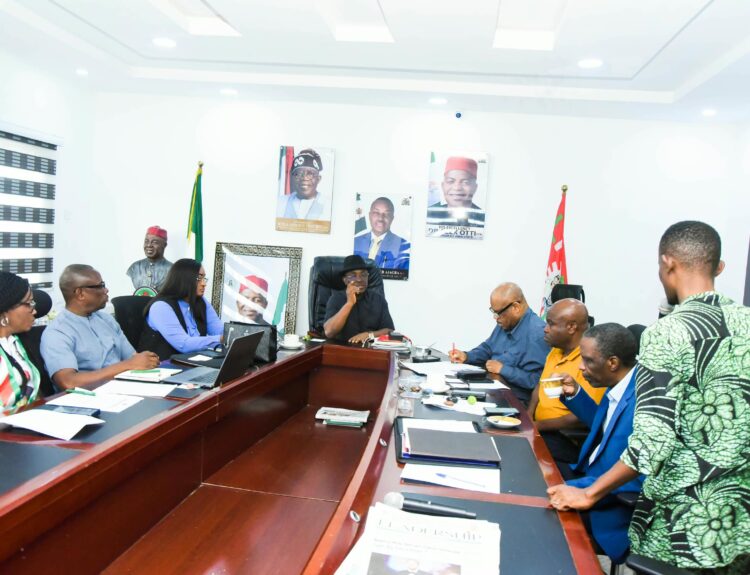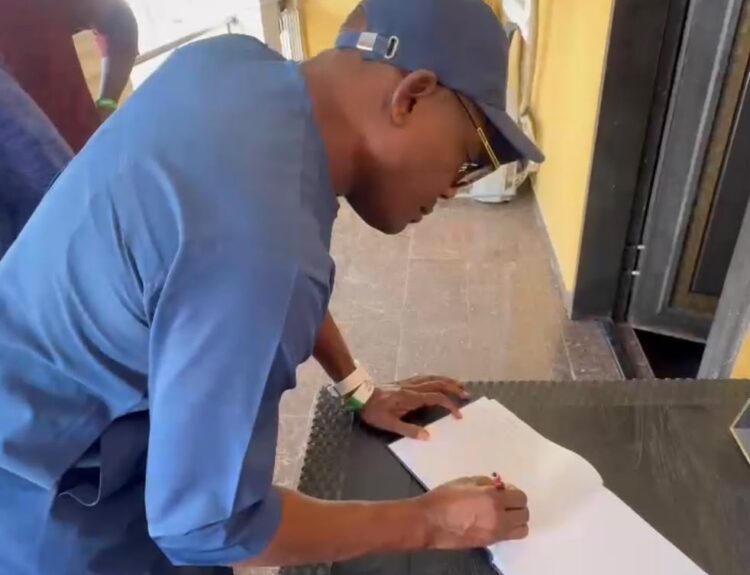


The Enugu State House of Assembly has passed the Landlord and Tenant Amendment Bill, which seeks to protect tenants from arbitrary rent increases and exploitation by landlords.
The bill was passed on Tuesday, November 17, 2026, following the adoption of a report presented by the House Committee set up to review the legislation.
The committee comprised members of the House Committees on Housing and Investment, Public Petition, Ethics and Privileges, as well as Judiciary.
The motion for the consideration of the report was moved by the member representing Nkanu West Constituency, Iloabuchi Aniagu, and seconded by the member representing Awgu North Constituency, Jane Eneh.
Presenting the committee’s report, its chairman and member representing Nkanu East Constituency, Okey Mbah, said the proposed amendment followed extensive consultations with relevant stakeholders.
Mbah explained that the legislation was designed to address the exploitation of tenants and make accommodation more affordable for residents across the state.
He said: “This bill will subside over 60 percent of what residents used to pay while trying to secure accommodation in Enugu State.”
Following the presentation, the House dissolved into the Committee of the Whole to consider the report and the bill before its eventual passage.
Under the provisions of the amended legislation, landlords will only be permitted to increase rent after four years, with any increment capped at two per cent of the existing rent.
However, where a landlord has undertaken reasonable renovation of a property, the permitted rent increase may not exceed 10 per cent.
Speaking after the passage, Speaker of the House, Uche Ugwu, said the new legislation would usher in a new lease of life for tenants in Enugu State.
The bill, titled “A Bill for a Law to Amend the Landlord and Tenant Second Amendment Bill, Cap 101, Revised Laws of Enugu State 2024, House Bill No. 3, 2025,” passed second reading on March 11, 2026, and subsequently underwent a public hearing on March 26, 2026.
With its passage by the Assembly, the bill now awaits the assent of Enugu State Governor, Peter Mbah, to become law.