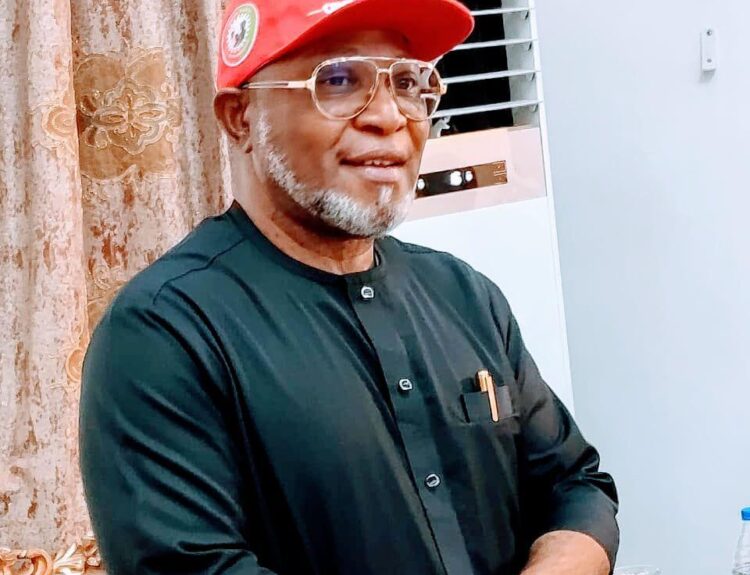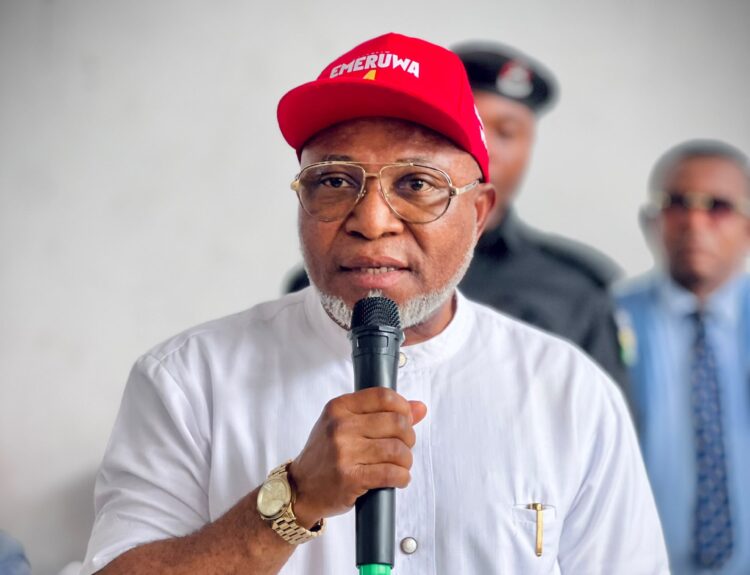

A chieftain of the All Progressives Congress (APC) and former Minister of State for Mines and Steel Development, Dr. Uchechukwu Sampson Ogah, has strongly refuted claims that his recent political positions are driven by desperation for power, describing such insinuations as misleading and counterproductive to healthy political discourse.
Click Here to Join Our Whatsapp Channel
In a detailed press statement addressed to the people of Abia State, Ogah said his support for the Executive Governor of the state, Dr. Alex C. Otti, is based on conviction, performance, and the need to prioritize good governance above partisan considerations.
He noted that it is neither unusual nor improper to support competence and effective leadership, even across party lines, stressing that loyalty to values and principles must not be sacrificed on the altar of rigid political alignments.
Ogah explained that his position is anchored on a longstanding personal relationship with Governor Otti, built on mutual respect, trust, and shared ideals. According to him, acknowledging the efforts of a leader who is delivering on his mandate should not be misconstrued as political desperation but rather seen as an act of integrity and consistency.
Beyond personal ties, the APC stalwart emphasized that his support is also informed by what he described as “tangible and measurable progress” in Abia State under Otti’s administration. He pointed to ongoing infrastructure development, particularly road rehabilitation, renewed focus on human capital development through youth empowerment initiatives, and improvements within the civil service, including regular salary payments and enhanced worker welfare.
“These are not abstract claims but real changes being experienced by the people of Abia,” Ogah stated, warning that ignoring such developments would amount to intellectual dishonesty.
He was quick to clarify that his stance does not in any way signal a defection from the APC, reaffirming his loyalty and commitment to the party’s ideals. However, he maintained that governance must transcend political divides and should be assessed based on its ability to deliver security, economic growth, and improved living standards.
Ogah criticized attempts to label his position as desperation, arguing that such narratives undermine constructive political engagement and distract from the pressing need to rebuild and reposition the state.
He called on critics to move away from what he described as unfounded allegations and instead contribute meaningfully to policy-driven discussions that will advance the state’s development.
“At this critical time, Abia requires a higher level of political culture—one that places performance above propaganda, collaboration above conflict, and the welfare of the people above all else,” he said.
The former minister concluded by urging stakeholders to elevate the tone of public discourse, engage in constructive debates, and hold leaders accountable with objectivity and sincerity.
He reaffirmed his commitment to the progress, unity, and prosperity of Abia State and Nigeria, expressing confidence that history would ultimately judge leaders and stakeholders by their contributions to the common good rather than their political affiliations.