
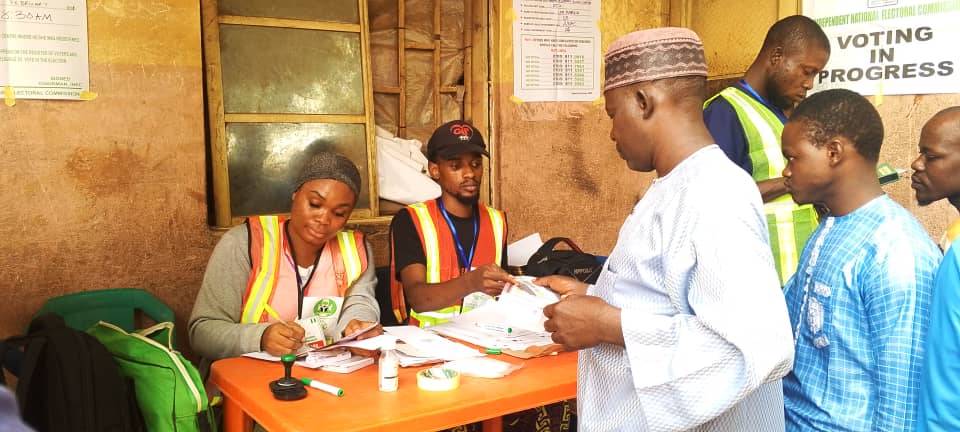

Last week, the President signed the 2026 Electoral Act, which will guide the conduct of elections in Nigeria.
The law has since sparked intense debate, especially among young Nigerians and social media users, following the National Assembly’s initial refusal to make electronic transmission of results mandatory.
Click Here to Join Our Whatsapp Channel
The protests attracted international attention and drew the participation of prominent opposition figures, including Peter Obi and Chibuike Rotimi Amaechi, who publicly joined the demonstrations.
Under mounting pressure, the National Assembly convened an emergency session and amended the Act to make electronic transmission of results mandatory—though with a notable caveat allowing manual transmission using Form EC8.
However, beyond the controversy over result transmission, the legislature quietly introduced another far-reaching provision—what can be described as the CTC clause.
The amendment provides that a Certified True Copy (CTC) of a court order shall be sufficient for swearing-in where the Independent National Electoral Commission delays the issuance of a Certificate of Return.
This provision carries both positive and troubling implications.
On the positive side, it closes a long-standing loophole.
In several post-election cases, Independent National Electoral Commission has taken days—sometimes weeks—to issue Certificates of Return even after receiving court judgments.
The new clause eliminates any vacuum in governance and strips INEC of discretionary delays that could undermine judicial decisions.
For legislative seats and election petition matters, once a tribunal or appellate court delivers judgment, governance can proceed without unnecessary obstruction.
In this sense, the amendment strengthens certainty and institutional efficiency.
Yet, the dangers are equally significant.
The provision may inadvertently infringe on candidates’ constitutional rights to appeal. In governorship election disputes, for instance, a tribunal judgment removing a sitting governor typically allows a 14-day window to file an appeal and seek a stay of execution.
Historically, INEC has respected this hierarchy, recognizing that election tribunals are courts of first instance and delaying Certificates of Return pending higher-court rulings.
With the elevation of a CTC to the same practical effect as a Certificate of Return, the question arises: does the 14-day appeal window still offer real protection?
A sobering precedent exists. In June 2016, a Federal High Court in Abuja sacked then Abia State Governor Dr Okezie Ikpeazu and ordered INEC to issue a Certificate of Return to Dr Sampson Uchechukwu Ogah in a tax-related case. Although the law provided time to appeal, the judgment was almost enforced immediately.
Only a series of emergency legal maneuvers, coupled with public holidays, delayed its execution until the Court of Appeal granted a stay.
At the time, Nigeria came perilously close to a situation where one governor would be preparing to lecture at a university while another was being sworn in at Government House.
With the 2026 Electoral Act now empowering a Certified True Copy to trigger swearing-in, such scenarios could become more frequent—and more chaotic.
The central question therefore remains:
Does strengthening judicial enforcement through CTCs ultimately deepen Nigeria’s democracy, or does it risk undermining due process and the right of appeal when INEC fails—or refuses—to act?
The answer may define the character of Nigeria’s electoral justice in the years ahead.
Written by Ireporta Public Affairs Desk.


1 Comment
Eziokwu Di Nkpa
8 months agoWhat did the new electoral amendment 2026 act say about a situation of a speaker of the house of assembly delaying the swearing in a candidate who upturned tribunal winning at the appealate court after having being surely issued with a certificate of returns by INEC as was in the case of Hon. Aron of PDP in Abia State who won his case at the appealate court and was duly issued with a certificate of returns by INEC and for several months, the speaker of the Abia State House of Assembly, delayed allowing his to take his oath of office and be inaugurated?